Search This Blog

Wednesday, July 18, 2007

North of the Great Wall

From the first moment we arrived in China in late 2005 we had been planning to make a trip to DongBei, literally, “The Northeast” of China. The Chinese say “Dongbei”, much in the same way we say “New England”, to refer to the northeastern part of the country; the part that is north of the Great Wall and includes Manchuria, and borders North Korea and Russia. Here’s a map.


To go right to the photos click here (they all have descriptions).

We had many reasons to make the trip. One, visit the Wang’s. The parents of one of our good friends from Raleigh live in Shenyang, the capital of Liaoning Province, and had invited us to visit them. Two, we had never been north of the great wall. Three, a trip in the summer would provide an escape from Shanghai’s sweltering summer.

A trip in summer 2006 did not materialize but the stars aligned in early June and we snagged a low round trip airfare to Shenyang. Here’s the report.

Friday June 09, 2007

Our flight on Shanghai’s budget airline, Spring Airlines left on time at 12:55 PM and we arrived at the newish Shenyang airport after a flight of about 1.5 hours.

I had a window seat, and just after takeoff was able to see the Tomson Shanghai Pudong Golf Club, a nearby windmill farm, and had a good view of the coast and the South China Sea.

They flight was uneventful except I’ll say that this flight on Spring was the most talkative one I’ve ever flown. Too much information over the PA: our partnership with Airbus, the cities we server; the weather, etc. All first in Chinese then in English. And in addition to selling food and drink, they hawk Spring Airlines memorabilia and souvenirs. Yes “hawk”. You would think the flight attendant is a street vendor. He must have spent 10 minutes describing his wares (all in Chinese). One can buy: the same green and yellow scarf worn by the female light attendants, a green metal water bottle, stuffed animals, model airplanes, etc.

However, thanks to Sun-Ling’s quick thinking, I was able to take a photo and shoot this video of the in-flight exercises. Yes, in-flight exercises.
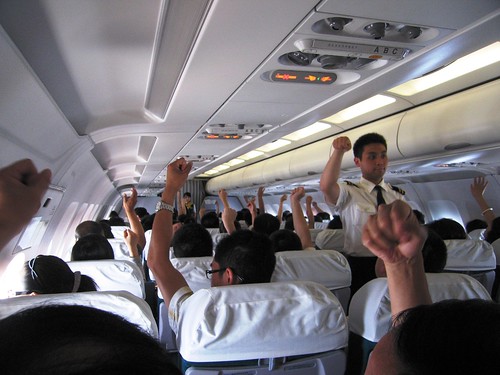
In Flight Exercises - Spring Airlines

The Shenyang airport is about 15 kms south of the city and we rode the airport bus, 10 RMB each, to near city center, then caught a taxi (another 8 RMB) to the Shenyang Guesthouse, a hotel complex on the grounds of the former Russian Embassy. We stayed in the newer South building.

The room was basic: TV, small fridge, 2 beds, 2 chairs, closet, desk, master between-the-beds console with 17 knobs and switches, AC, plenty of hot H2O, shampoo, razor, etc. All for 278 RMB per night, about 35 USD.

Checked in, threw the bags down, took a quick stroll around the compound, and grabbed a taxi (11RMB) to Shenyang University’s North Gate and had a nice dinner with Mr. and Mrs. Wang. They are retired professors who have lived in Shenyang for many years.

Notable was the micro-brewery just outside the North Gate.

Sun-Ling’s family name is Shen, just like the Shen in Shenyang so we saw her name on lots of signs.

Saturday June 10: Plan for the day: Eastern Tombs (Dong Ling), Imperial Palace (Gu Gong), and Zhang Family Compound.

Up before 8 AM but not out the door until 8:30. First stop the Eastern Tombs (Dong Ling) the tombs of the first Qing Dynasty Emperor and wife.

The woman at the front desk not only gave us the best bus route to the tombs – bus #248 to bus #218 – but the practical details of where to catch each bus. The bus ride was cool: #248 around Government Square to the East Gate of the old city wall; then we snagged seats on #218 for the 45 minute ride to the tombs. Passed prison barracks where US troops were held during the Korean War.

Rode #218 to the end, about 200 meters from a mostly empty Dong Ling parking lot. Since we had skipped breakfast, we bought 11 RMB worth of snacks from a vender just outside the ticket office, but skipped the overpriced iced tea at 5 RMB. Good thing we brought our own water.

Tickets were 30 RMB each. The tomb of Nurachi, the first Qing emperor was pretty cool, although a bit run down, sloppy restorations in some spots, and the new rest rooms were closed. The old ones had zero running water – gravity only if you know what if mean. ;-)

On the positive side the tomb area was impressive. The 108 step entrance, the Square City, the stelea in both Mandarin and Manchu, the mound of earth that is the actual grave. It is deserving of UNESCO World Heritage status.
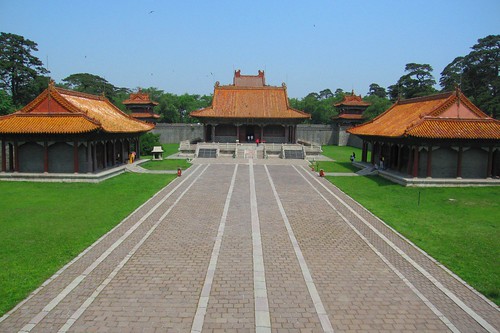
Dongling - Imperial Tomb - Shenyang, China

There were 2 Exhibition Halls with photos and diagrams explaining the common layout and features of all 15 Qing tombs in China, and even included a small section on Pu Yi the Last Emperor.

Exited, bought a cold tea for 3 RMB from a vendor near the bus stop and caught bus 218 back to town. Got off one stop before the East Gate at the eastern end of the Zhong Jie pedestrian shopping street. It was hot; at least 90 F and many folks were strolling. We walked the length, looking for a lunch spot; passed Pizza Hut, Starbucks, McDonald’s, before settling on Europaer, a Taiwan-style coffee shop where we had 2 Iced Coffees and a 10-inch Veggie Pizza, all for 51 RMB (about 7 USD) after getting a 15% discount for using our credit card.

Finished eating about 1pm – a good rest - and walked one block south to Zhenyang Jie to the Qing Imperial Palace (50 RMB each).

Just outside the Imperial Palace.
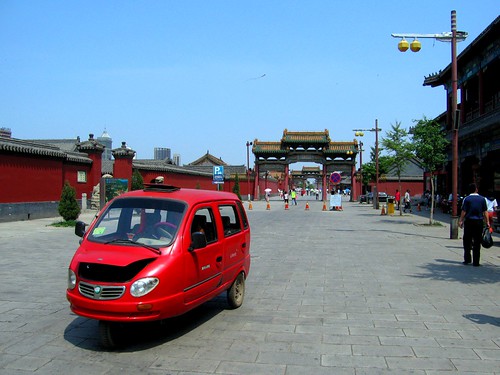
Three wheeler - Shenyang, China

We took our time – about 2 hrs – to really explore all 3 major sections of the palace. Some impressions:
-Good English signage, inside and outside, for the 50+ buildings of “The World Heritage Unit”.
-Very interesting central below-floor heating system.
-The western section’s mid-60’s restoration is fading fast. Lots of peeling paint.
- Too bad you can’t “go up” in any of the multi-story buildings.
-Good explanation the banner system
-Swords, guns, pikes, cannons.
-The older eastern section with Dazheng Palace, the octagonal building, is cool with many Manchu Dragons.

The throne room of Mukden Palace. Check out the dragons.
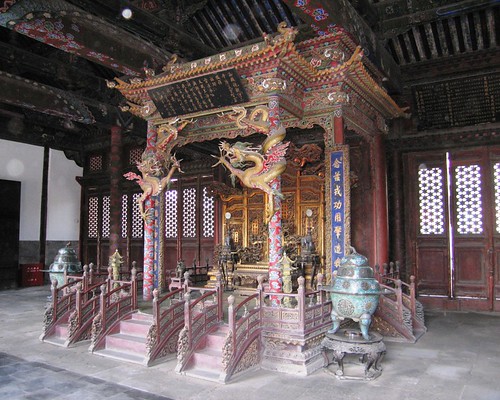
Mukden Palace - Shenyang, China

Then, a 10 minute walk to the Zhang Family Compound of the famous warlord (father) and patriot (son). 50RMB each. More good English signage. Cool early 20th century buildings: Chinese, Western, and Modern styles. The elder Zhang had 6 wives – wow - and they all lived in this compound. The bank and financial museum next door was also included the admission.

When we left in early evening, kids were practicing their inline skating around the statue of General Zhang in the small square just outside the compound.


We walked through the back streets, past an historic Art Deco middle school, emerging at the West Gate, were we had a delicious dinner at the Xing Long Xuan Restaurant. Liangpi (6) – 20 Jiaozi (11) and 2 beers (19) for a total of 41.The liangpi was sensational: mung bean noodles with cilantro, cucumber, peanut sauce and wasabi.

Left the restaurant around sunset 7:45 and headed to the hotel via Government Square. We were soon caught up in a mass of people headed to the square. It was rockin’ and all lit up. After the initial “Wow” of the 100 jump ropers (see video), my favorite sight was the harmonic band, conductor and all, which you can see at the tail end of the video below. Amazing.


Other “acts” included:
- 10 night kite flyers – kites have small lights on their edges
- 100 line dancers- (see video)
- 200 exercisers (following one guy)
- Square dancers
- Harmonic, drums, and accordion combo (with PA)
- Not to mention soccer, scooters, badminton, foot shuttlecock
- A guy handing out Herbalife flyers

What a happenin’ place.

A short 10 minute walk back to the hotel. – shower and crash.

Sunday June 11: Plan for the Day: Beiling Park and Northern Tomb, Tawan Pagoda, and Mao Statue.

Up at 7:30 AM and out the door just after 8 (checked bags at the front desk).

Picked up bus #220 right by the hotel, rode almost straight north for about 10 stops past the Train Station to the East Gate of Beiling Park (8 RMB each). The south entrance would have been a better choice. It was a 15 walk to the Tomb entrance (30 RMB), resting place of Huang Taji and know in Chinese as ZhongLing (Luminous Tomb).

This tomb has the same layout as the Eastern Tomb but is about 30% bigger and 50% better maintained. This tomb mound is covered with concrete and topped by a single tree. Cool. – quite an “image”.
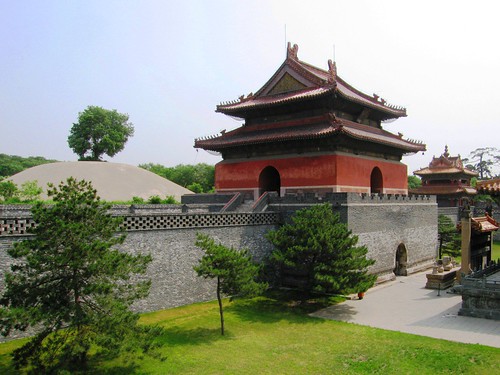
Imperial Tomb - Shenyang, China

Since we came in by the East Gate, we missed all the vendors, hawkers, kite flyers, bicycle renters, etc. until the way out. Quite the cultural site, but not an single toilet inside. What’s up?

A word about professional kite flyers. In Beiling park we saw some retired guys best described as professional kite flyers. They were gathered in one spot. Their bikes were configured to carry all sorts of gear: several kites, a chair, lunch boxes, etc. They had kites for different wind conditions and various sorts of rigs to make reeling easy. I did not get a photo. Rats.

We bought some snacks, about 10 RMB, exited Beiling Park via the main entrance and caught bus #205 in the direction of "The Pagoda of Buddhist Ashes” (Tawan Stupa).

It’s a good 10 minute uphill walk from the bus stop to the pagoda entrance. The site, which is on a bluff above the river, will be magnificent once the cleanup of the surrounding area is finished. The pagoda, called “Tawan Stupa” on the English signage and “Pagoda of Buddhist Ashes” by the usual guide books, is octagonal and 33 meters high. The entrance fee is 10 RMB. There are some exhibits and it is not possible to climb the pagoda.
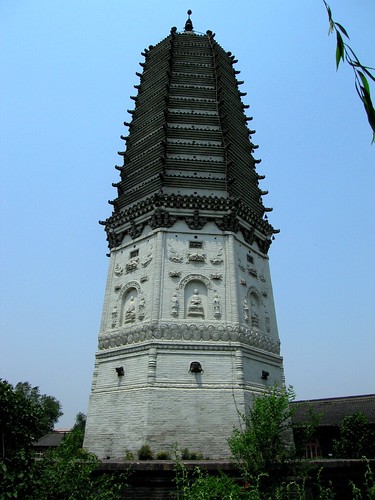
Tawan Pagoda - Shenyang, China

Grabbed a taxi (15 RMB) to Zhongshan Square, home of the famous Chairman Mao statue. The square is large, with the statue in the middle, and ringed with 1930’s building, including the Art Deco Police Station, banks, and hotels. The Statue of Mao is a weird brown color and he seems to be directing traffic. Around the base are statues of peasants, workers, and soldier, all in the socialist-industrial style.
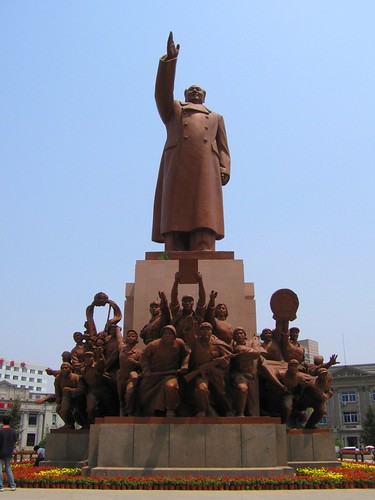
Chairman Mao Statue - Shenyang, China

Streets radiated like spokes from the square. We walked down the SW spoke where we found the usual “affiliated” brands of Starbucks, KFC, Pizza Hut, and McDonald’s.

Headed west towards the old Post Office and Telephone buildings. The Telephone building was way cool – gothic deco. Ended up eating at Europaer again (different location of course) where we had 3 Iced Coffees, Ice Cream, 10-inch Veggie Pizza, French Fries – all for 98 RMB after the 15% discount.

Caught a taxi that took us back to the hotel to pick up our bags, and then to the airport, all for 82 RMB including toll. Arrived at the airport at 2:25 PM with plenty of time for our 3:40 Flight. That’s it. Thanks for reading.

Tuesday, March 27, 2007

Fujian, China - Part 1 - Shanghai to Quanzhou

We had such a good trip to Southeastern China last New Year's holiday that we decided to return this year to visit Quanzhou and Xiamen in Fujian Province. Here’s the story.

Dec 29, 2006

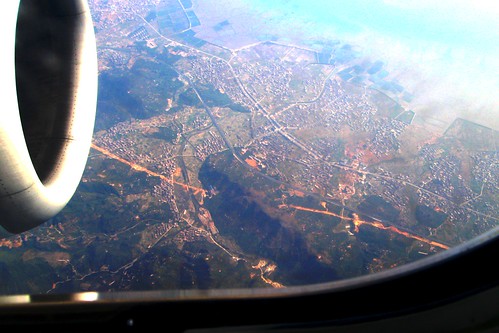
Taxi from home to Hongqiao Airport (28 RMB). The 12:45 flight to Quanzhou took off on time. I had the window seat and the passing landscape below had me engrossed the whole journey: the mountain ranges of Zhejiang, the construction of the new high-speed railway from Fuzhou to Xiamen, and the coastline and cityscape of Quanzhou.

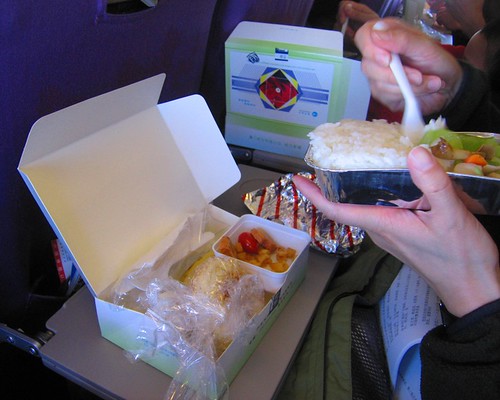
I was surprised when the flight attendant produced 2 vegetarian lunch boxes upon our request even though we had not ordered special veggie meals in advance.
Veggie Meal

Here’s a shot where you can see tunnel construction for the new Fuzhou-Xiamen High-Speed railroad.
High Speed Rail Tunnel - Near Quanzhou, China

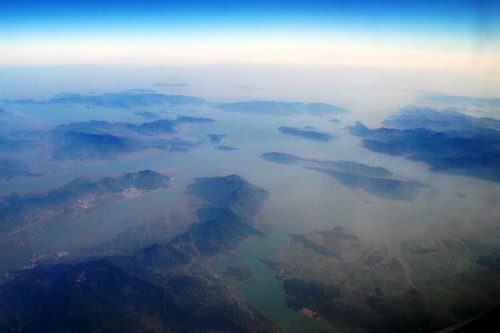
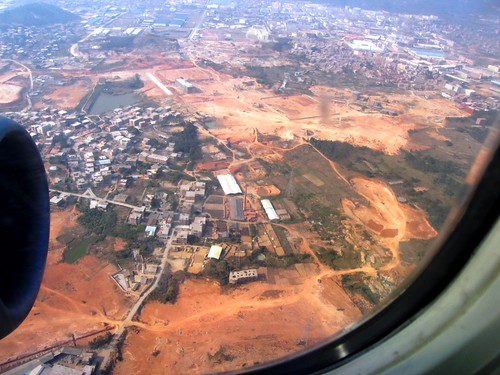
As we neared the Quanzhou airport, I could see both the coastal islands and the coastline. The local granite is known world wide and appears to be quarried with no thought to the consequence; aesthetic or environmental.

Beautiful Coastline.
Fujian Coastline

Scars from mining.
About to land in Quanzhou, China

Landed at the Quanzhou airport at 2:11 PM. Ignored the transport touts, walked out to a main road, and snagged a taxi (32.5 RMB) for the 20 minute ride to the recently renovated Quanzhou Overseas Chinese Hotel. For 300 RMB per night we got a double room with new carpet and new bed quilts, breakfast included, modern stylings, and a view of the nearby Confucius Temple.

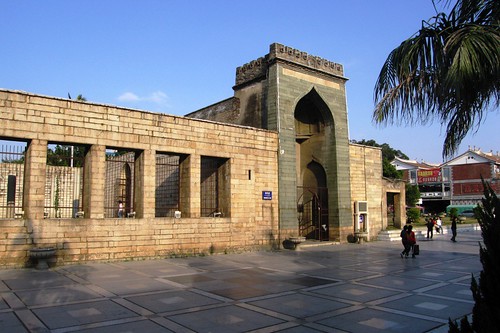
We threw our bags down and headed out the door at 3:05. First stop: the Qingjing Mosque of Quanzhou (3 RMB). Cool - and just a 5 minute walk from the hotel. The first Muslims – missionaries sent by Mohammed himself - came to Quanzhou in about 618 AD.

This mosque is in the Persian style, built about 1000 AD and modeled after a mosque in Damascus. It’s the first Mosque we’ve seen in China that was not Chinese architecture.
Mosque - Quanzhou, China

After 20 pleasanst minutes in the Mosque, we walked through the back streets towards the Kaiyun Temple (10 RMB). Lots of back-alley activity.

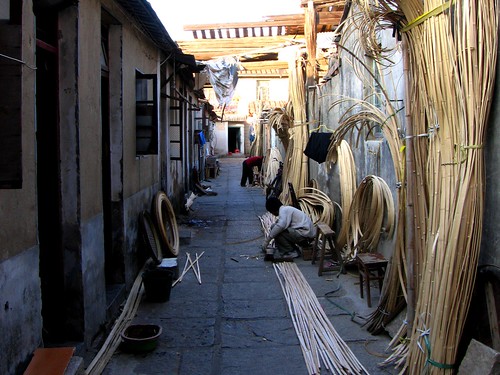
Bamboo basketmaker.
Basketmaker - Quanzhou, China
.
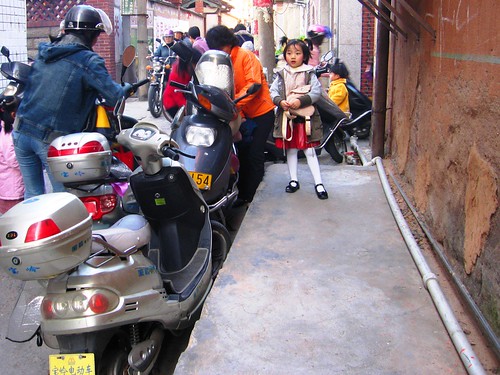
Elementary school pickup.
Pickup - Quanzhou, China

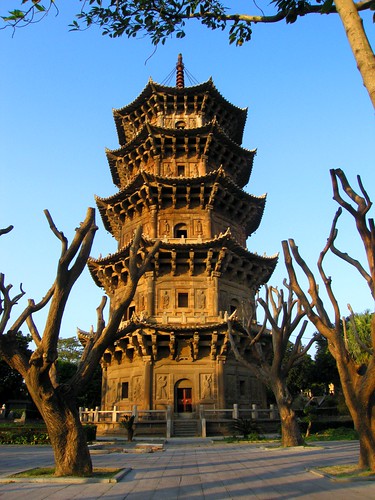
Kaiyun Temple is big complex with twin stone pagodas (no entrance – bummer), monks, monk’s quarters, gardens, new temple construction, 1000 y.o. old trees, a main temple of 100 pillars, and a ship museum.

One of the pagodas.
Pagoda - Kaiyun Temple - Quanzhou, China

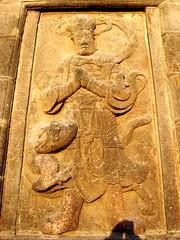
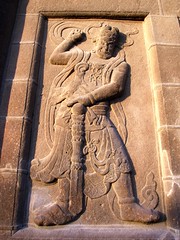
Closed(L) and open(R) mouthed Guardians carved into the lower pagoda facade.
Guardian KaiYun Temple - Quanzhou, ChinaGuardian KaiYun Temple - Quanzhou, China

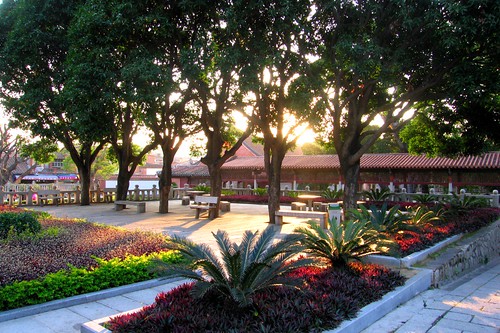
Gardens
Kaiyun Temple - Quanzhou, China

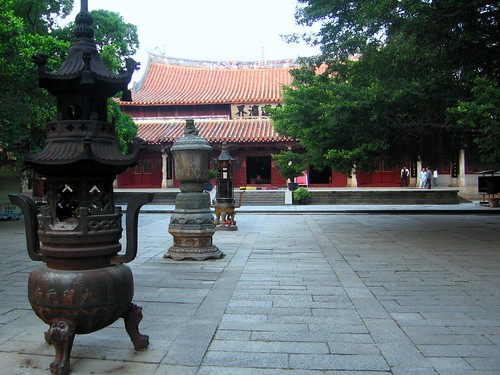
Main Temple of 100 Pillars – no photos allowed inside.
Kaiyun Temple - Quanzhou, China

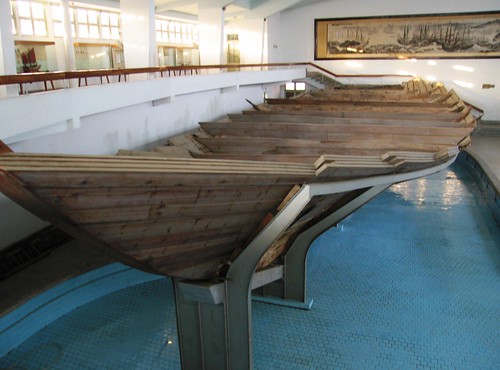
Ship Museum: Ship excavated from nearby harbor.
Ship Museum - Quanzhou, China

New Construction
Kaiyun Temple - Quanzhou, China

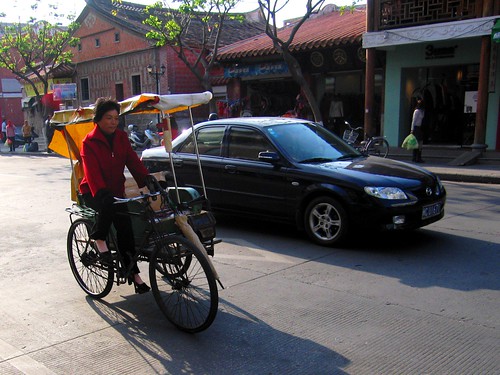
After leaving the temple, we rode a bicycle rickshaw (6 RMB) to the Beimen (North Gate) in search of a vegetarian restaurant that turned out to be closed. In Quanzhou the bicycle rickshaws are the side-car design; that is, instead of the usual symmetric tricycle design – one wheel in front and two in the back - it’s a regular bicycle with a two-seat side car.

Here’s a photo and some video of the ride.

Rickshaw - Quanzhou, China


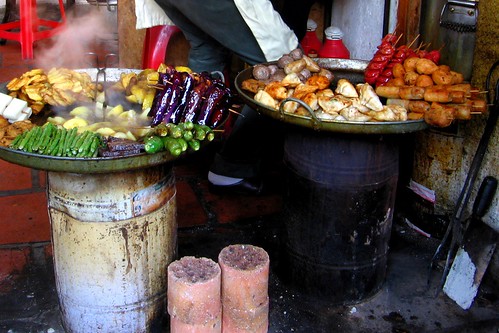
So we rode Bus #3 (1 RMB) back to the hotel area. The one vegetarian restaurant near the mosque did not look appealing so we hit one of the side streets for some on-the-spot, deep-fry, Yunnan-style veggies and a cold beer (all for 26 RMB).

Kababs - Quanzhou, China

Back to hotel at 7:30 PM.

SLHOTD: “The Mosque was really cool.”
JHOTD: Dinner.

For all the photos from Dec 29, click here.

Sunday, January 21, 2007

Japan 2006 - Part 6 - Nara Temples and Moon Viewing

Oct 06, 2006

Plan for the day: Nara Temples and Moon Viewing

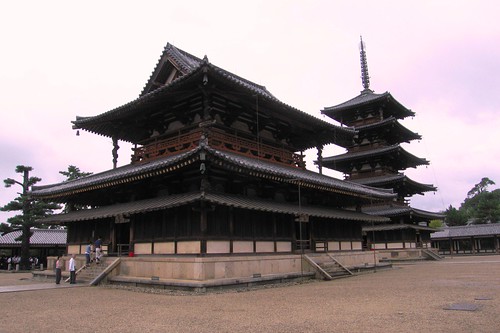
Up at 7AM and out around 7:30 AM. Bought coffee and pasties at same Boulangerie as yesterday and caught the 8:09 train to Nara. At Nara Station, made a quick stop at Tourist Info and then jumped on the 9:29 Yamatoji Line train to Ikaruga Station. The station is under construction, but we made it out in the right direction and walked the 15 minutes to Horyuji Temple complex (1000 Yen each). OK. A small museum, and the oldest wooden buildings in the world. Yes? It is a UNESCO World Heritage Site.

Horyuji Temple
Horyuji Temple - Nara, Japan

Looked to us that many of the Oldest Wooden Buildings in the world have been reconstructed or given face lifts. Haven’t; these folks ever seen the Antiques Road Show. Refinishing kills the value. ;-)

But seriously, the temple complex dates to 552AD, just after Buddhism was brought to Japan. The pagoda had interesting art. Ceramic, realistic, figures of people watching a reclining Buddha enter Nirvana. You don’t usually see “realistic” human figures in Buddhist temples.

Toured the museum and the 8-sided temple. Walked back to the station, past soy bean fields, and some “cool” boxy cars.

Back to Nara about noon. Walked uptown and had a delicious meal at Mellow Café, recommended by Rough Guide. We each had the curry lunch special: A taro curry and all the rice and bread you can eat with oolong iced tea. All for 1050 each. A great break. Yum!

The Mellow Café was modern with hip wait staff, wood furnishings and would have “fit in” anywhere in Europe or the States. They were almost full with a “business lunch” crowd.

Then back to TI at the other train station were they recommended against biking to the temples – too many steps and stairs. First some shopping. Bought a cross-stitch book for 1650. Then to the temples.

First, Kofukuji, with its 5-story Pagoda which can be seen from nearby lake. We did not pay admission, just walked around. We noticed activities at the lake that appeared to be preparations for Mid Autumn festivities (or here they call it the fall Full Moon Viewing Fair).

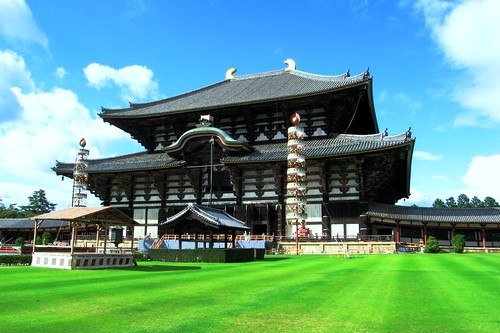
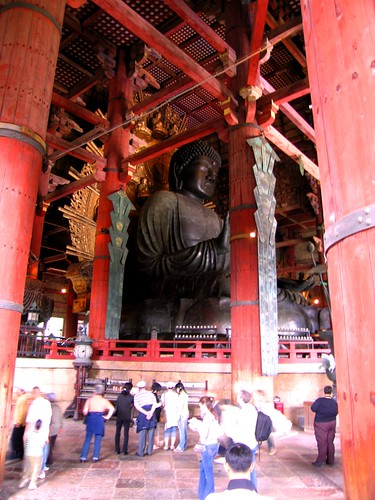
Then on to Todaiji Temple (East Big Temple) and Daibutsu (Big Buddha). Admission is 500 each, about $4.50 US. Todaiji Temple is the world’s largest wooden structure with a very large bronze Buddha statue inside. Way cool. The sun began to come out.

Todaiji Temple.
Todaiji Temple - Nara, Japan

The Big Buddha
Daibutsu (Big Buddha) - Nara, Japan

There were lots tour groups. Foreigners, local school kids, and locals. The kids enjoyed squeezing through a hole in one of the temples immense pillars.

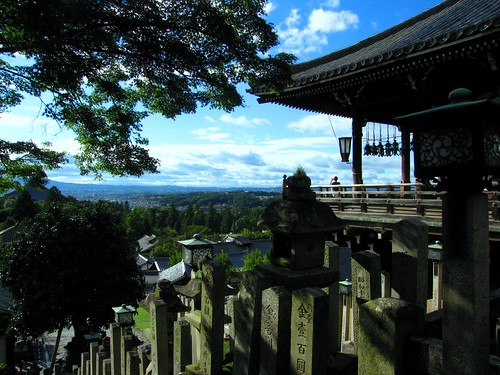
Then up the hill to the nearby North Temple which had a pretty good view back to Nara.

View back to Nara from North Temple.
View from North Temple - Nara, Japan

The temples are located around Nara Park, which is home to several museums, and about 1000 tame deer who can be a nuisance to tourists and children who have food. There are vendors who sell “deer food”. One old woman was shouting “Bambi cookies” to an arriving tour group.

The sum was out and we walked the 1.2 km to the Kasuga-Taisha Shrine which features lots of lanterns inside and out. We did not pay to see the “treasures”. Then a straight 1.9 km walk back to the station.

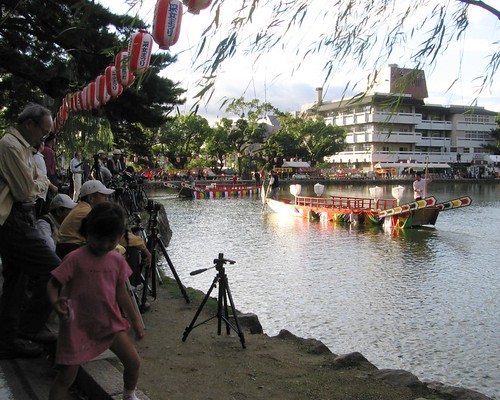
The Full Moon Viewing Fair was in full swing when we walked by about 4:30. Vendors: food, games, goldfish, French fries, crepes, green rice cakes filled with red bean paste – yum, cakes, skewers, etc. And at least 100 photographers had set up tripods on one side of the lake to save a spot for best view of the lake, pagoda and rising full moon. I should have found a spot for my 3 inch mini-pod but did think of it until later. ;-)

Nara, Japan

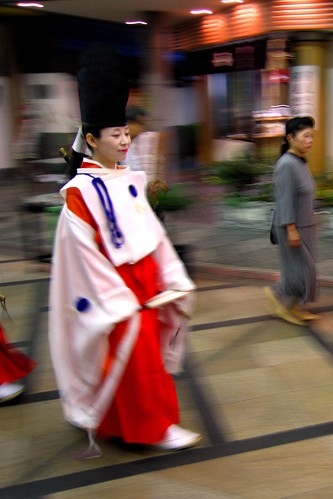
We did some shopping – bought 2 aprons and a cloth screen. Then we saw a procession coming down the shopping arcade. Men and women, young and old, with funny black hats like priests wear in Japanese movies – somewhat like coneheads - several carts. The procession processed slowly and eventually circled the pond.

Nara, Japan

We bought more snacks and watched some sort of Shinto Ceremony with ritual dancing.

Then to a café for cake and sandwich. By then the main procession had boarded 2 boats and made a turn around the lake.

We left the Fair and scooted back to the station and caught the 7:38 back to Kyoto. Got another 9000 yen out of the ATM at central PO. Back to Yuhara and paid bill of 25200 and we are left with 2000 for tomorrow to by coffee and snacks.

Took bath, packed as tomorrow we must get up at 6:10 and be door at 6:30 in order to catch the 7:13 back to Fukuoka.

SLHOTD: Full Moon Viewing Fair.

To see all the photos from Oct 06 click here.

Oct 07, 2006

Up and out as planned Caught the train. In haste, transferred to the wrong bullet train; however, with the conductor’s help, we got off at the next station and got on the right train Caught the plane and arrived home in Shanghai with no problems.

Observations on Japan

1) Why are we living in the “wild west” Shanghai when we could be living in “civilized” Tokyo or some other Japanese city?

2) Japan is not that crowded, with easy access to nature and wide sidewalks; and generally it's easy to move along in the pedestrian areas.

3) The cars are way cool. The boxy look is in. Did not see many Honda Accord sedans. Not many large SUVs. The Nissan Cube rules.

4) Getting around on public transport is easy, especially if one is used to using Public Transportion in a large city. English signage and announcements abound. “We are traveling @285 km/hr” announces the message board at the front-end of the train car. It’s a bit bumpy at that speed.

5) I was surprised by how many Japanese speak English well enough to give directions, take an order,conduct basic shopping transactions, fix our train mistake, and take a train reservation. SL says it’s because the places we went have lots of tourists. But I wonder how many foreigners wander in to the 38 Noodle Mansion in Kyoto or the other small restaurants we visited?

6) Vending machines: while there are a lot, they mainly dispense drinks and smokes, not everything as commonly said.

7) Japanese are very polite and like their space - nnlike the Shanghaiese. SL believes one cannot live cheaply in Japan as housing is expensive and so is food; compared to Shanghai where housing is a bit steep but food is cheap.

Saturday, January 13, 2007

Japan 2006 - Part 5 - Himeji Castle and Kyoto Temples

Oct 5, 2006

Plan: Himeji Castle in the Morning, UNESCO World Heritage temples in the afternoon, Gion District at night.

Up early at 7:00 AM. Took down laundry, washed, packed, and out the door at 7:30. Arrived at station about 7:45 and got reservations on the 8:22 to Himeji and back to Kyoto on the 11:02. Stopped by the bus station and bought 2 1-day passes for 500 Yen each. Picked up breakfast: Iced coffee, Iced Cappuccino, 4 pastries. Excellent - from Boulangerie Café near station for 1155.

The Hikari bullet train took less than one hour to Himeji plus a 20 minute walk to the castle. Paid 550 admission each and did the fast one hour self-guided tour and back to the station just in time for the 11:02.

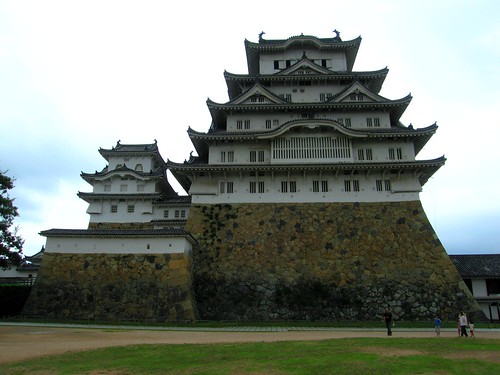
Himeji Castel is one of the few original wood construction castles to survive WWII. It’s a usual 15th-16th century castle with slots for gun, ramparts, lots of gates, and the highlight is the 6-story wooden tower (see photo) built out of many large wooden beams. There were many western tourists. Maybe they are all visiting from China like us. ;-)

The wooden tower of Himeji Castle.
Himeji Castle

Here’s some video of us boarding the bullet train in Himeji Station.


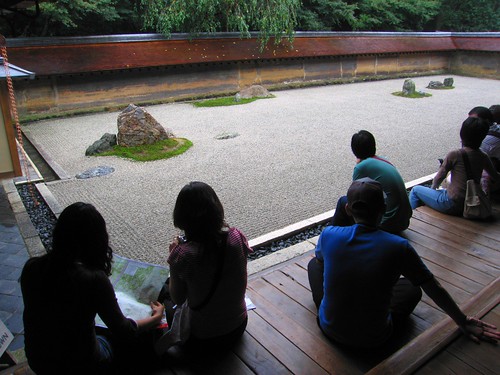
After returning to Kyoto we rode the local bus to NW to visit Ryoanji Temple with its famous Zen Garden – not crowded and cool. Sun-Ling wants me to construct a Zen Garden for her one day. Ha! Off with the shoes and up on the wooden viewing platform. There are 15 rocks but you can only see 14 of them at one time.
Ryoanji Zen Garden

Also had fun with the carved stone that has a riddle. If you read Chinese you may figure it out.

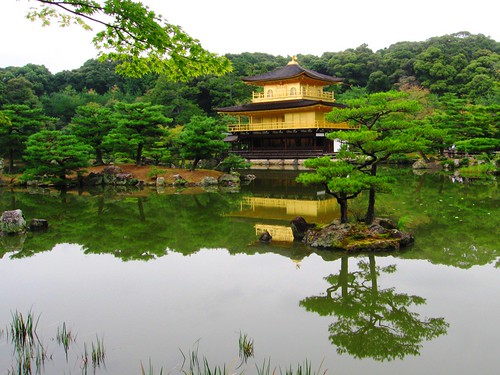
Next, a short walk/bus Kinkauji Temple with famous Golden Pavilion - crowded and over-rated, or maybe not up to expectations.
Kinkakuji (Golden Pavilion) Zen temple

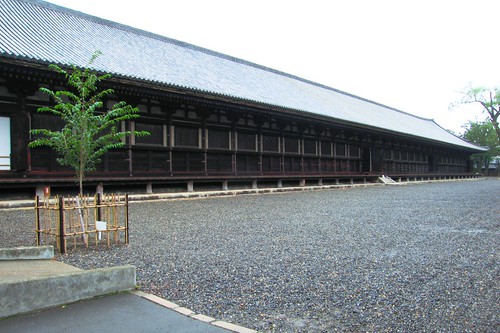
Then over to the east side of town to the Sanjusangendo Hall of 1001 Buddhas and the longest wooden building in Japan. Not crowded and cool. Impressive. Once a year they have archery contests out back. It's the home of 2812 national treasures.
Sanjusangendo Hall  - 1001 Buddhas - Kyoto

And then Kiyomizu Temple (Clear Water Temple) complex which was crowded and interesting. Good but not great views back to Kyoto. School children (and adults) were lined up to get a chance to drink the spring water using a cup on the end of a long pole. See video below. Lots of fun.


Then to Gion District. It was raining again. We wondered around and saw 5 geisha, complete with umbrella and low-necked back collar. Sun-Ling was surprised to actually see them. No photos.

Then we wandered again in the rain searching for dinner. Finally found a local snack joint just across the River from Gion. Great atmosphere – 10 seats at the bar, five tables and 3 young ladies working there with just enough English. I think we must have skipped lunch as I was very hungry.
Dinner: 2 Asahi Drafts, Deep fry tofu, fried veggies, and soba noodle stir-fry. All for 2600 Yen.

Home. Rode 2 bus stops and then a short walk back to the Yuhara. For a nice private bath. The private is a Japanese style bath. They draw water in a big stainless steel tub and then call you down. Slippers, Robes. You sit a wash yourself first – soap and shampoo - then into the tub for a nice soak.

SLHOTD: Zen Garden.

To see all the photos from Oct 5, click here.,

Japan 2006 - Part 4 - Tokyo to Kyoto

Oct 4, 2006

Up at 8:15 and out the door at 8:40. Had no trouble negotiating rush hour subway and commuter train traffic and made it to Tokyo Station @ 9:10. Bought 2 Iced Coffees and 4 pastries at Café Chez La Gare for 1420 Yen and got on the 9:36 Hakari to Kyoto.

The train ride was uneventful and we could not see Mt Fuji because of the clouds.

Here’s some video I took out the window as the bullet train pulled out of the station.


Pulled in on time @ 12:20 to Kyoto Station and by 12:40 we were at Yuhara Ryokan Inn, which is about 20 minutes walking with packs, from Kyoto Station.

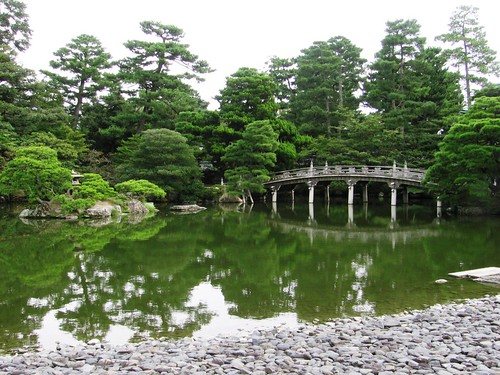
The ryokan check-in was not until 3:00PM so we dropped off the bags, signed in, and walked NW to catch the subway up to the Kyoto Imperial Palace. We arrived at the “Imperial Palace Household Office” at 1:40, just in time for the 2PM English tour. Picked up a couple of ice-cream sandwiches for 100 yen each.

The guided tour lasted for one hour, mainly for non-Japanese citizens, and was a good look at the outside of the buildings and gardens.

Kyoto Imperial Palace Garden

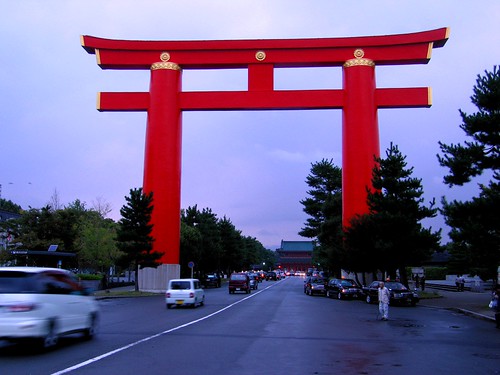
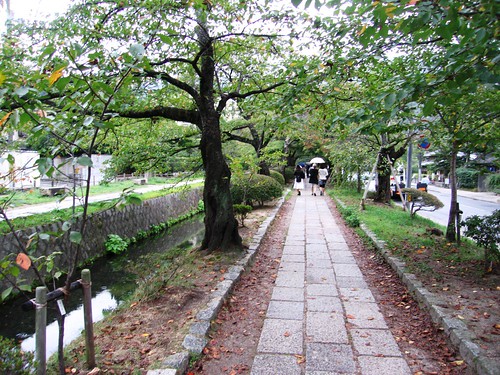
After the tour we rested, plotted, and then rode bus #102 over to the start of the so-called Philosopher’s Walk. Funny - we had recently been in Heidelberg Germany, home of another famous Philosopher’s walk. It began to rain just as started down the path, so we bought 2 soft ice creams, and waited. No improvement, so down the Philosopher’s Walk we went. Not too many tourists, just the occasional dog walker. We walked past many temples, shrines, shops, restaurants, and emerged west of the Heinan Shrine with its Big Red Gate.

Big Red Gate ...

Visited Heian Shrine then walked south through more temples, picked up a veggie bento box at a 7-iholding convenience store (7-11) and continued to the top of the hill where we could see Kyoto Tower in the distance, and then walked downhill, over the River, arriving back at the Yuhara around 6:30 – quite a walk.

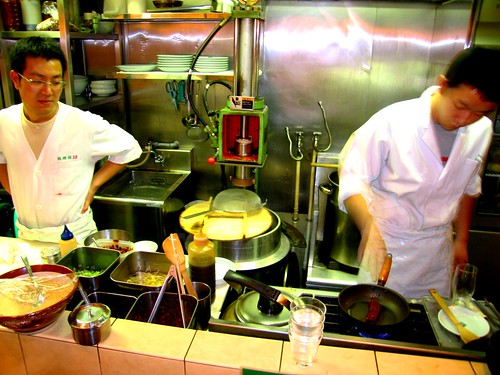
Then out to dinner in the neighborhood at 38 Korea Noodle Mansion. Two guys were working behind the counter (see photo). At first we tried using English to tell them we were vegetarians. Some success. Then on a whim I tried Chinese. Turns out both guys are Chinese. They were surprise to hear me speak Chinese. ;-) We had 2 Suntory malt drafts, 1 stone bowl, 1 noodle soup, for 3200 – kinda steep. Then back to Yuhara, had a traditional Japanese bath, and hit the sack.

The two Chinese cooks at 38 Korea Noodle Mansion.
38 Korea Noodle Mansion - Kyoto

SLHOTD: Philosopher’s Walk.
Philosopher's Walk - Kyoto

To see all the photos from Oct 4, click here.

Most Recent Post

Greece: Vergina Royal Tombs

On Easter Monday we went to Vergina. Vergina was the original capital of the Macedonian until the 4th century BCE, later the burial grounds ...

Most Popular Posts of Last 30 Days