Normally there is a train between Jesenice and Lake Bohinj, but there is work on the tracks this week, so we ended up on the "replacement bus". They didn't send enough buses - a few folks had to stand - plus it ran behind schedule. I'm not impressed with Slovenia so far. We were in Slovenia 25 years ago. It seems they could have made more progress in the intervening years. I may be judging them too harshly....
The upside to the replacement bus was we went by Lake Bled. We were there 25 years almost to the exact date. I wasn't impressed then, now I know it was because I saw it on a cloudy day. The lake is a completely different color in the sun. The other thing I noticed is that 25 years ago Lake Bled had been shut down for the season. This time we saw all manner of water activity: sunbathing, swimming, paddleboarding, etc. I attribute the difference to climate change. John thinks maybe there are just in general more people traveling, resulting in more activities.
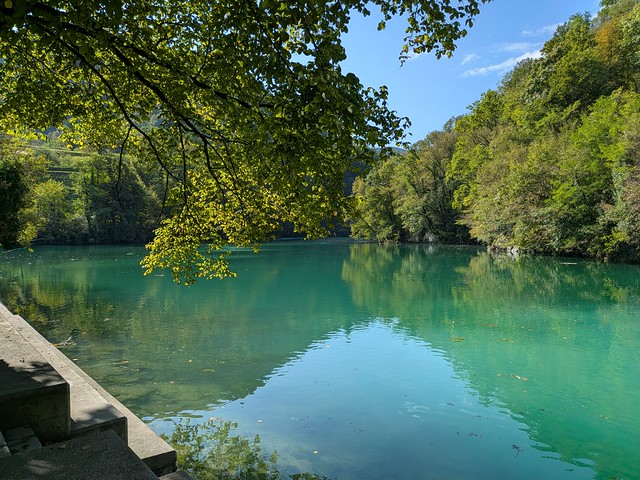
Lake Bohinj is quiet and serene. We based ourselves in Stara Fuzina, just north of the lake. The village still has a traditional feel; that is, you can smell the barns. The first day we rode the train to Most na Soci where the Soca river is dammed for hydroelectric before it is joined by the Idrijca river (this post). The Soca is known for its turquoise color, and we plan to explore its upper part later in a few days (next post).
We board the spiffy RED OBB Austrian Train at Lienz.

Then change to a blue Slovenian train at Vallach.

Buying the "Replacement Bus" tickets from Jesenice to Bohinjska Bistrica, Slovenia

The Replacement Bus stopped in Lake Bled - an unexpected bonus as it slowly moved around the lake perimeter.

Once settled in Stara Fuzina, we strolled down to Lake Bohinj (bowHEEN) to check out the sunset.


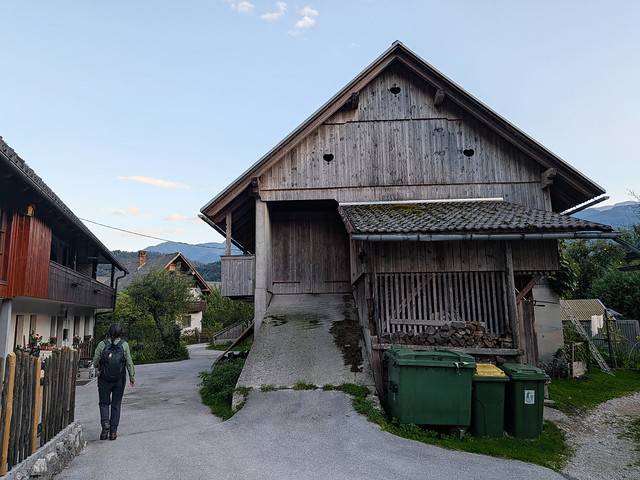
On the way back to our guesthouse we passed a traditional hayrack.They are all over the place in rural Slovenia.

Our end of Stara Fuzina was more of a rural village than a tourist village.



At Bohinjska Bistrica Station, waiting for the train to Most na Soci.


While we were waiting the novel-to-me "car train" arrived. All the cars drove off the far end, several cars drove onto the train (first below), and the sturdy green locomotive moved from one end of the train to the other for the return trip (2nd below).


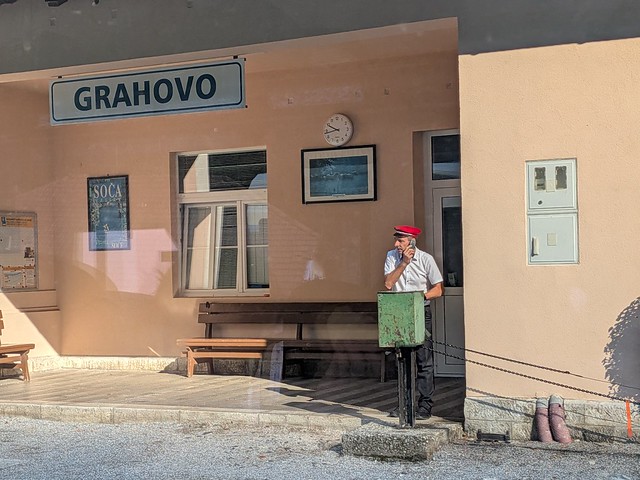
The Station Master at GROHOVO Station is cranking away.
While walking from Most na Soci Railway s\Station into town, we foraged the best tasting fig ever.

Soca River confluence.

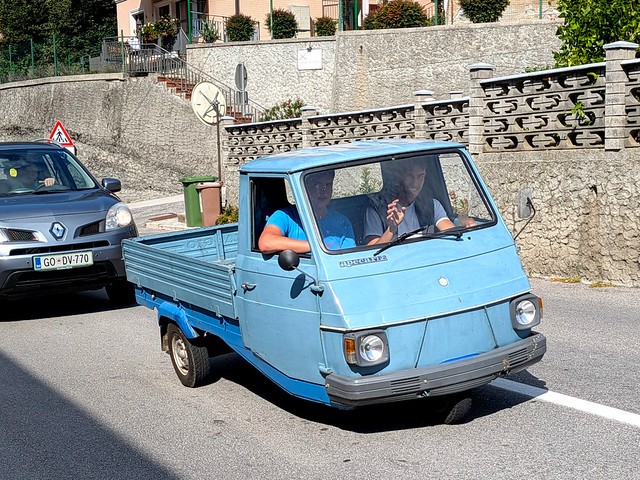
In Most na Soci, one can see ruins of a Roman house, at least one traditional hayrack, and a vintage three-wheeled light blue Piaggio Ape work vehicle.




No comments:
Post a Comment